
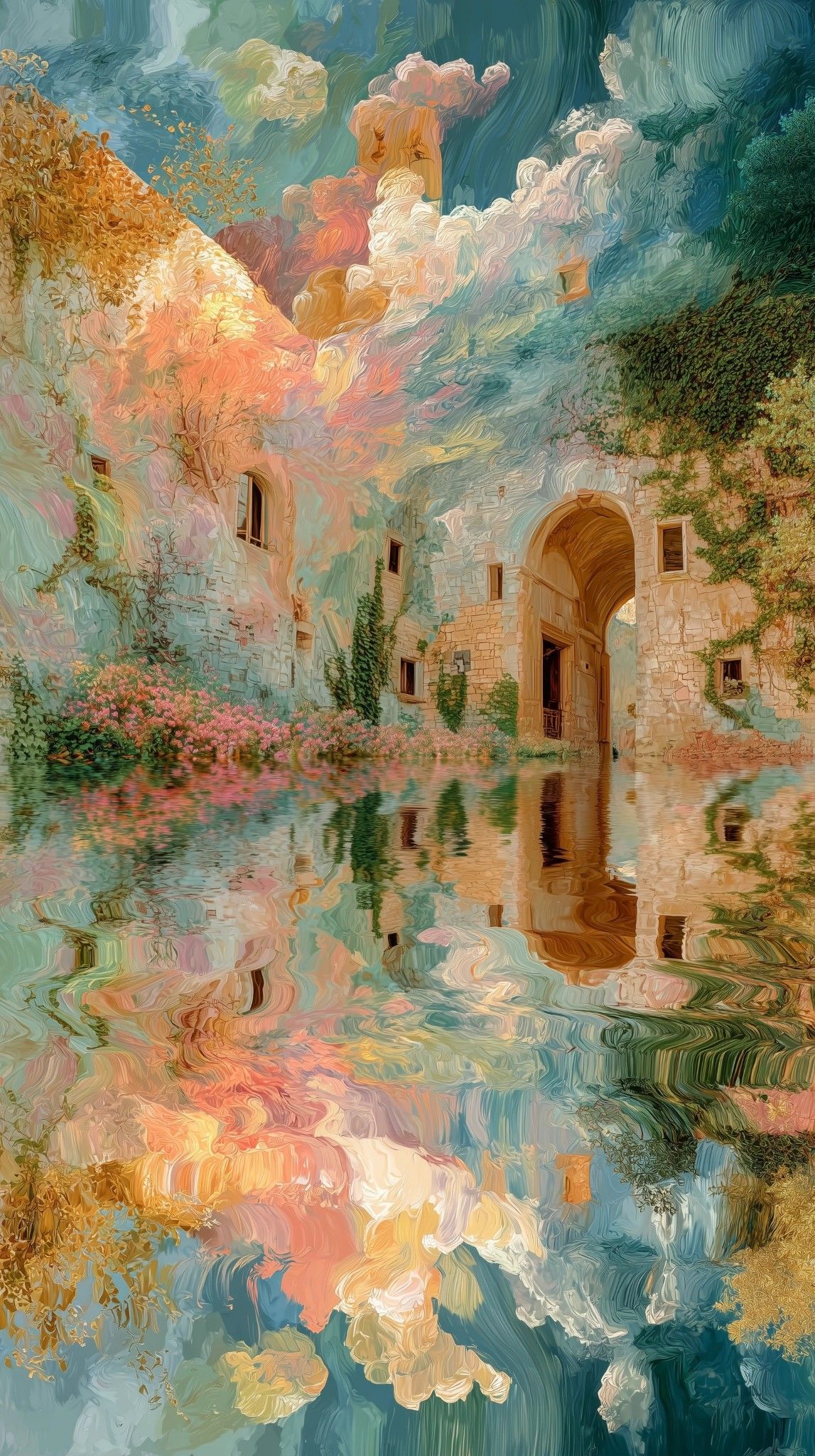
I have always wondered whether color is perceived differently by all individuals. Imagine pointing towards the sky and saying, Such a beautiful blue. But what if my blue is actually others’ green, will we ever know?
We grow up believing that colors are fixed, but what if color wasn’t a universal truth at all? The simple thought opens a profound doorway into one of nature’s most intriguing mysteries. The mystery of perception.
Emotion cues and Colors:
In many cases, a person’s experience with a specific color also brings out an emotion attached to it, causing the dimensions of a color to become more subjective and personalized as per the individual.
For instance, when a person reaches the point of peak happiness and the color that they have associated with the experience represents the color of joy. If a person is getting married to the love of their life, if the physical cues involve colors such as pink, golden, such colors will be directly linked to their attitude of joy.
Understanding the concept of Qualia
As per the philosophy of mind, qualia refers to the ‘what it is like’ feeling of an experience, such as the redness of red, the sweetness of honey or the texture of sand between your fingers. No scientific methodology can ever fully capture this inner dimension of qualia. We can surely measure the wavelengths of the light or the neural activity in the visual cortex or the chemical responses to the retina, but none of that explains how a specific color like blue feels to a person.
This leads to a haunting question: Do we all see the world in the same manner or are we just merely sharing an agreed-upon illusion based on learned labels?
The “Inverted Spectrum” Thought Experiment
Philosophers describe this idea as the inverted spectrum problem. Surpassingly, since birth your brain translates the wavelength of light as a label of blue into the feeling I would experience as “green”. Since we both learned to label that color as “blue”, we flawlessly navigate the world thinking the other individual perceives the same blue as us without realizing that our internal experiences differ.
This does not mean one of us is wrong, rather it suggests that perception is not an objective mirror of reality but a differentiated perception of our mental code and state.
The Artist’s Invisible Canvas
Consider an artist, brush poised, painting the only world they truly know, the one behind their eyes. Every stroke becomes a confession of sight.
If color perception were truly subjective, art would become an even deeper expression of individuality. When Van Gogh was painting the “Starry Night,” perhaps the swirling yellows and blues did not reflect universal aesthetics but his personal sensory landscape and perceptions.
Artists might include descriptions of their inner color experiences, much like musical notations, to guide others through an approximate experience. Additionally the museums could organize interactive “color empathy” exhibits, allowing visitors to step into another person’s perceptual world.
Art, in such a world, would move beyond visual beauty and enter the realm of shared consciousness ,attempting to bridge the gap between one individual’s qualia and another’s.
Safety, Language, and Shared Vision
Yet our lives run on patterns of color we have collectively agreed upon. While red tells us to stop, green urges us forward. Hospitals rely on a set of color codes to signal life or warning.
If perception of colors itself were unstable, we would need a new grammar of safety and trust where a world is not ruled by hue, but by sound, symbol, or motion. The stoplight might hum, the hospital chart might whisper tone instead of shade.
In the End, a Shared Mystery
Maybe, it is better this way, the differences in our seeing might be a personal touch to our personality and being, teaching us that even in the sameness, we are varied, even in unity we are individualized by wonder.
Perhaps, color is a metaphor for otherness, the gentle reminder that we will never be able to fully step into another’s eyes, but we can still look together at the same horizon and call it beautiful.




Leave a Reply